
Categoria: Finding Clarity
-

Già vs Ormai: How to Use Them Correctly (with Examples)
In Italian language, the distinction between “Già” and “Ormai” is crucial, and understanding it is essential. “Già” refers to something that occurred earlier than expected, while “Ormai” signifies something that cannot happen or change anymore. Once grasped, using them will be a piece of cake!👋
-
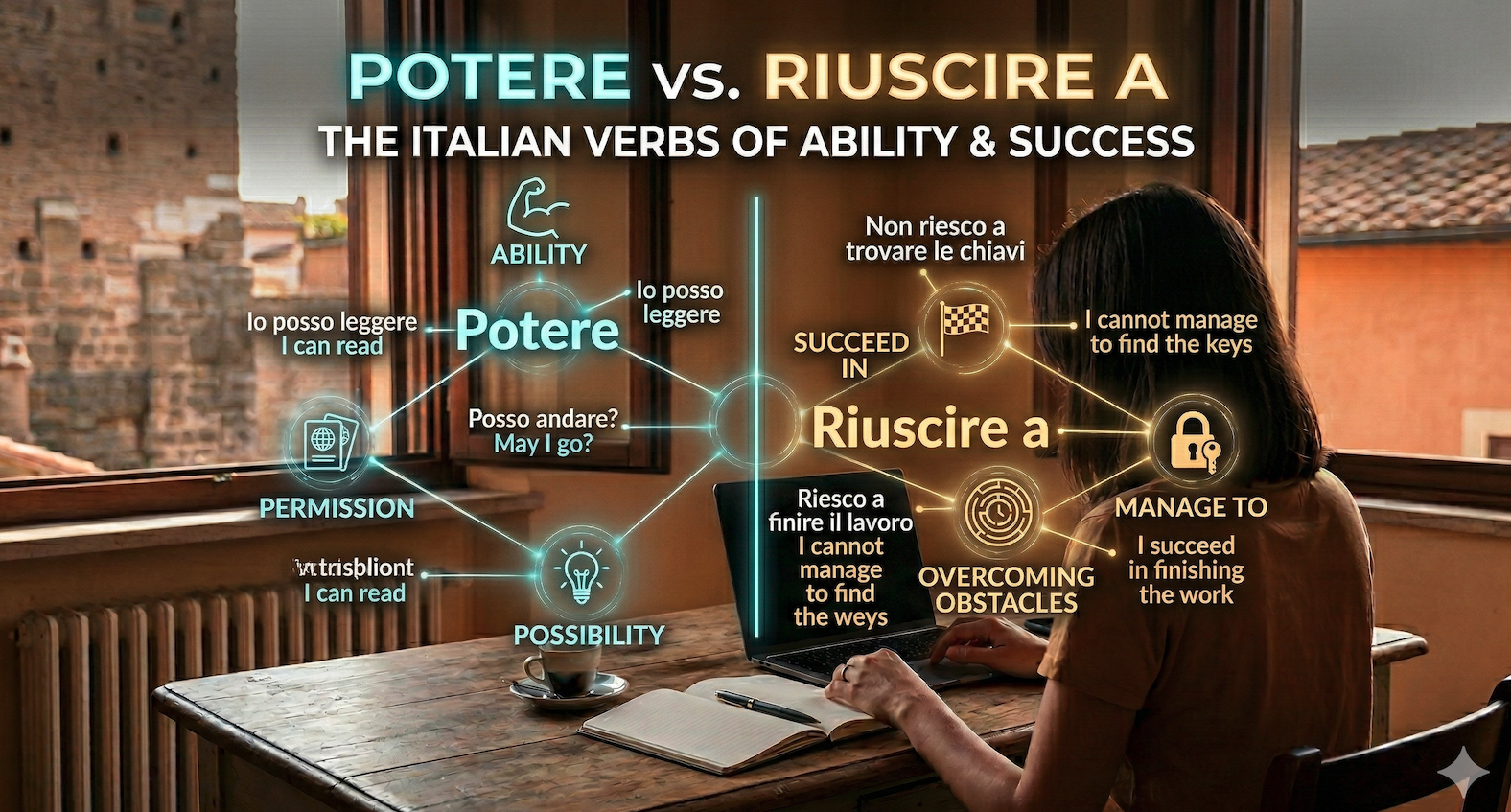
Potere vs Riuscire: What’s the Difference in Italian? (Free PDF Exercises)
In Italian, “potere” and “riuscire” both mean “can” or “to be able to,” but with different nuances. “Potere” deals with permission and possibility, while “riuscire” focuses on personal capability and effort.
-

How to Use Pronouns with the Passato Prossimo (Rules & Examples)
Struggle with pronoun agreement in Italian? Learn how to use direct object pronouns with the passato prossimo. Free PDF summary and exercises included!
-

‘Molto’ or ‘Tanto’? Learn When and Why to Use Each in Italian
Ciao! 👋 If you’re learning Italian, you’ve probably seen both “molto” and “tanto” used in everyday speech. They both seem to mean “a lot”, right? So… what’s the difference? The short answer: in many cases, they’re interchangeable — but not always. Let’s break it down together in a friendly and practical way. When “molto” and “tanto” mean the same Both molto and tanto can be used…
-

Why ‘Piacere’ Is So Difficult in Italian? A Simple Guide
Struggling with the Italian verb piacere? Learn how to use it correctly with our simple grammar guide, clear examples, and a free PDF worksheet!