
Categoria: Articoli
-
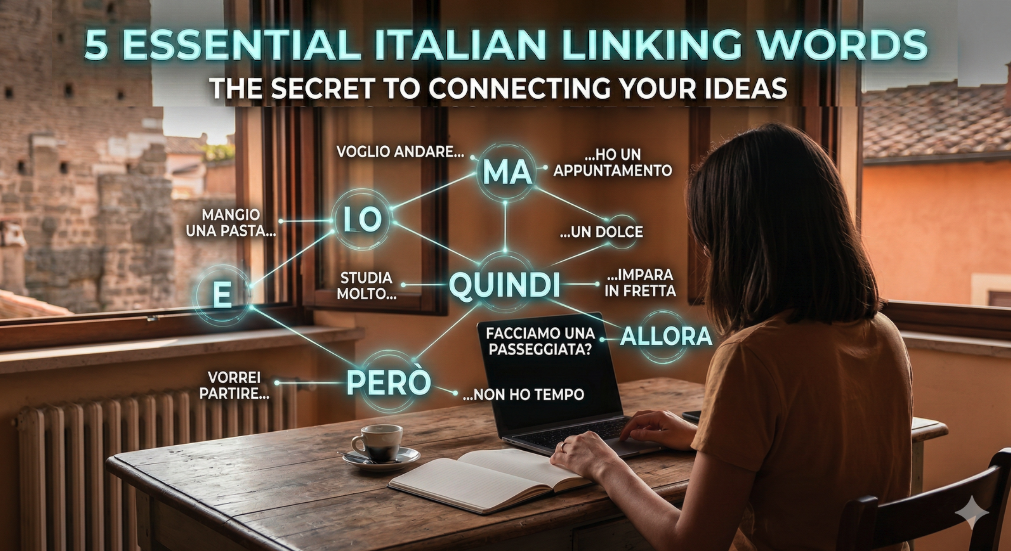
5 Essential Italian Linking Words You Need to Use Every Day
Questo articolo è una guida sull’uso delle parole italiane “quindi”, “dunque”, “insomma”, “allora” e “infatti”. Spiega come questi connettivi arricchiscono le frasi, enfatizzando relazioni di causa ed effetto. Comprendere le differenze rende la comunicazione più fluida ed elegante. Impara a sorprendere gli italiani… in italiano!
-

Learn Italian by Reading: 5 Mystery Novels for Intermediate Learners (B1-B2)
Master Italian through the thrill of mystery Reading time: 12 minutes Do you love mysteries? Are you a fan of thrillers that keep you on the edge of your seat? Then you’re in the right place! Reading Italian mystery novels (called gialli in Italian) is a fantastic way to improve your Italian: you learn new…
-

How to Use “Addirittura” in Italian Like a Native (4 Examples)
Wondering what “addirittura” means in Italian? Master this versatile word with clear translations, daily usage tips, and practical examples. Learn more!
-

Già vs Ormai: How to Use Them Correctly (with Examples)
In Italian language, the distinction between “Già” and “Ormai” is crucial, and understanding it is essential. “Già” refers to something that occurred earlier than expected, while “Ormai” signifies something that cannot happen or change anymore. Once grasped, using them will be a piece of cake!👋
-
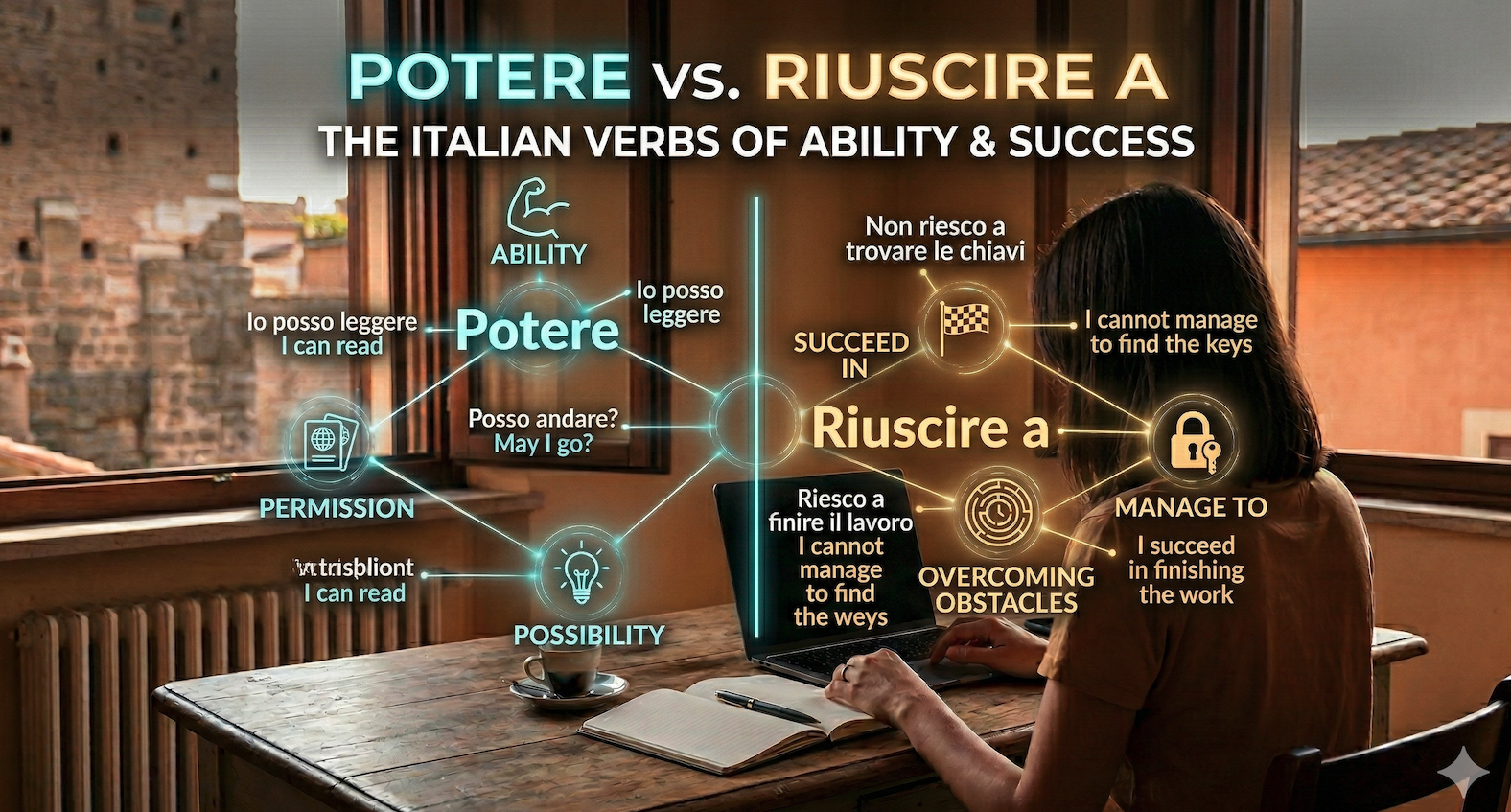
Potere vs Riuscire: What’s the Difference in Italian? (Free PDF Exercises)
In Italian, “potere” and “riuscire” both mean “can” or “to be able to,” but with different nuances. “Potere” deals with permission and possibility, while “riuscire” focuses on personal capability and effort.